
Bad air killed you. That was the operating premise of European medicine for most of the nineteenth century, and it shaped nearly every significant hospital built in the period. The smell of putrefaction, the vapour rising from stagnant water, the exhalation of a crowded ward — these were not symptoms of disease or byproducts of it. They were the disease, as far as any educated clinician of 1840 could tell. The word for this invisible agent was miasma, from the Greek for pollution or stain.
The theory was ancient — rooted in Hippocratic observation and systematised by Galen — but it found its fullest architectural expression in the reform hospitals of the mid-nineteenth century. If contaminated air caused illness, then the entire purpose of a hospital building was to ensure that air moved, freshened and escaped before it could accumulate around a patient. Every design decision followed from that premise: the spacing of beds, the height of ceilings, the direction a ward faced, the gap between pavilion blocks. Florence Nightingale turned miasma into dimensional standards — beds per ward, cubic feet of air per patient, window heights — and published them in Notes on Hospitals in 1859. The numbers were precise and they were architectural. Build to these figures and your building would not poison its occupants.
The pavilion plan was miasma theory made structural. Wards occupied long, narrow, parallel blocks so that windows on both sides could draw a current of outdoor air straight through the room. No ward's exhaled air would enter another; corridors connected the blocks at one end only, kept narrow so that bad air from one pavilion could not migrate laterally. Hôpital Lariboisière, completed in Paris in 1854, demonstrated the principle at scale and was studied — copied, in some respects — by hospital planners across Europe and North America for decades. John Shaw Billings, planning Johns Hopkins Hospital in Baltimore in the 1870s, worked through every dimension of the pavilion with a ventilation model firmly in mind, because germ theory had not yet settled the argument and miasma remained the most coherent available explanation for hospital-acquired infection.
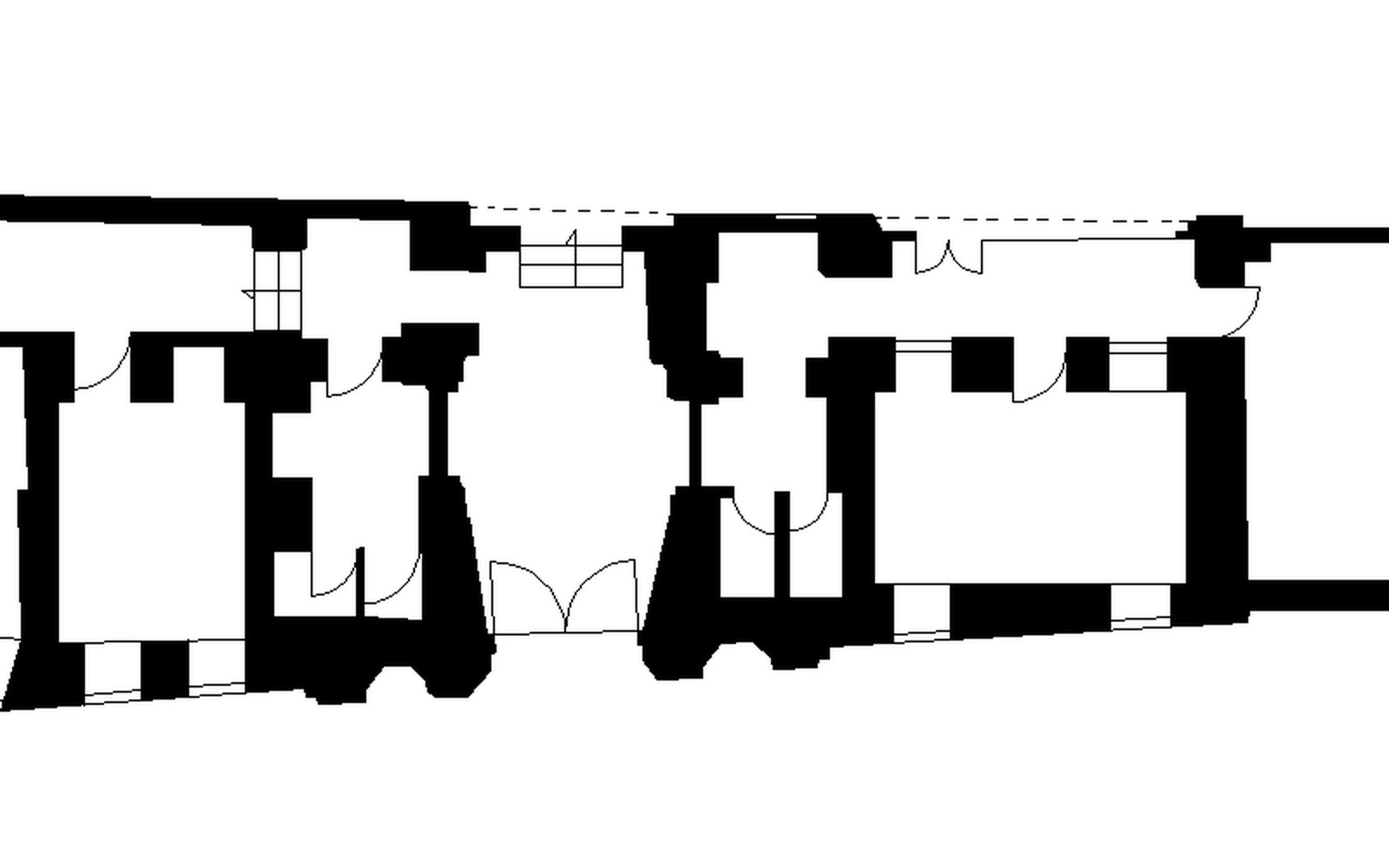
The historical irony is substantial. Miasma was wrong. Disease is caused by micro-organisms, not by smells. Robert Koch identified the tuberculosis bacillus in 1882 and the cholera bacillus the year after; within two decades the mechanisms of most major infectious diseases were documented and the miasmatic framework had collapsed. But the buildings it had produced kept working. Cross-ventilation and low bed density did, in practice, reduce infection rates — because moving air disperses airborne pathogens, because uncrowded wards lower the concentration of infectious particles, because natural light inhibits bacterial growth on surfaces. The reform hospital reformers were right about the remedy even though they had entirely the wrong explanation for the disease. A Nightingale ward worked by germ-theory logic even though it was designed by miasma-theory logic, which is one of the stranger coincidences in the history of medicine.


The theory's collapse did not immediately change the buildings, but it gradually removed the intellectual urgency behind them. Once infection had a mechanism that did not depend on air quality, engineers could imagine replacing open windows with mechanical ventilation and sealed envelopes. The shift to the sealed tower was made possible — not caused, but possible — by germ theory's displacement of miasma. When the corridor no longer needed to be ventilated in a specific direction, it could go anywhere; when wards no longer needed bilateral windows, they could be placed in the deep interior of a large floor plate. The hospital could become a machine rather than a wind instrument.
What miasma left behind is an argument worth revisiting: that the formal properties of a building — its orientation, its section, its window arrangement — can constitute a medical instrument. The germ theorists were right, and the miasmatists were wrong, and the buildings the wrong people built are still, by measurable standards, among the most habitable hospitals ever constructed. That is not a reason to revive a dead theory. It is a reason to pay very close attention to what the theory was actually doing in plan.